UK Student Loan Overpayment Guide: When to Pay Extra and When Not To
Core conclusion: 85% of borrowers should NOT overpay. This article uses math to show why, and which high earners are the exception.
After receiving a bonus or inheritance, the instinct is "pay off my student loan." But UK income-contingent student loans aren't normal debt—they have a 30-year write-off period. For most people, overpaying is like throwing money into the sea.
Mental Accounting vs Mathematical Reality
Humans naturally hate debt, but student loans break traditional debt logic:
Psychological Appeal
- • "Debt-free" satisfaction
- • Reduces future interest
- • Simplifies finances
- • Removes uncertainty anxiety
Mathematical Truth
- • 85% of borrowers never clear principal
- • Money earns higher returns elsewhere
- • Monthly payments don't change (PAYE is income-based)
- • Overpayments = wasted if written off
Mathematical Validation: Who Should Overpay?
Overpayment only makes sense for those who "will clear the full debt before write-off".
Case 1: High Earner (Should Overpay)
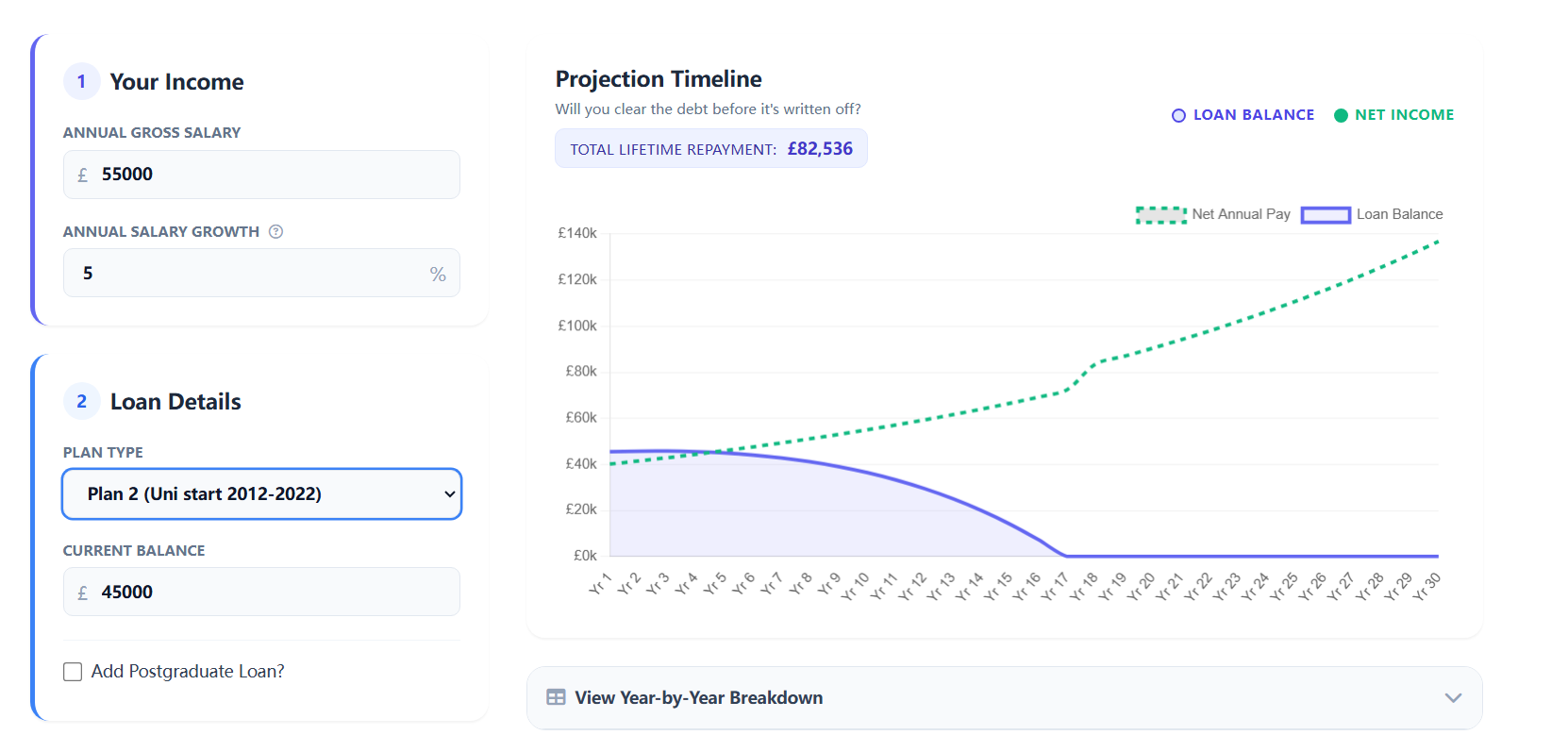
Profile: plan 2, £55,000 salary, 5% annual growth, £45,000 loan balance
• Calculator shows: Repaid in 17 years (13 years before write-off)
• Total repayment: £82,536 (£37,536 interest)
• If overpay £500/month: Repaid in 7 years, save £26,577 interest. And If overpay £200/month: Repaid in 11 years, save £17,928 interest
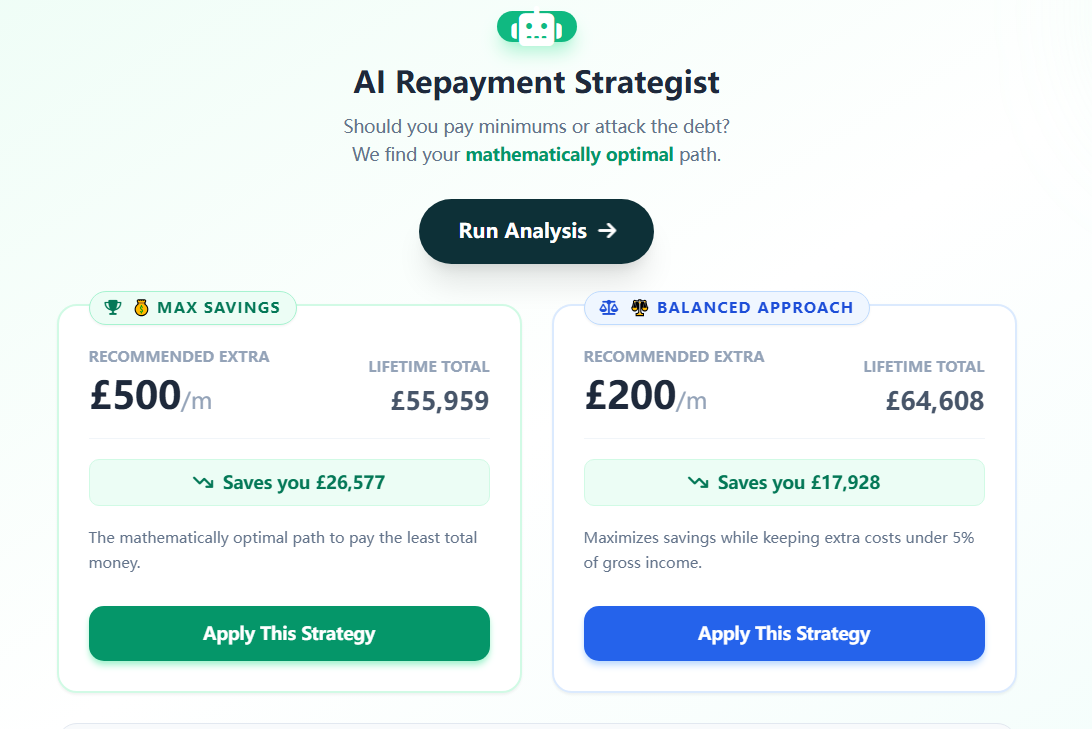
Conclusion: Overpayment makes sense, but only after building an emergency fund.
Case 2: Middle Earner (Should NOT Overpay)
Profile: £38,000 salary, 3% annual growth, £50,000 loan balance
• Calculator shows: 30 years (write-off) → balance cancelled
• Total repayment: ~£83,368 (never clears principal)
• If overpay £200/month: Still 20 years to write-off, total £85,328
• Loss: £1,960
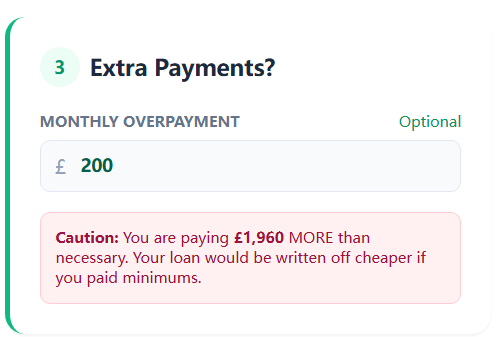
Conclusion: Money better used for house deposit or investments—overpayment is a loss.
Alternatives: Better Uses for Your Money
If you have extra cash, these almost always beat overpaying:
- Build Emergency Fund: 3-6 months expenses (£5,000-15,000) for job loss or emergencies
- LISA Savings: £4,000/year with 25% (£1,000) government bonus for first home
- Stocks & Shares ISA: Historical returns 7-10%, far exceeding student loan effective rates
- Pension Contributions: Employer matching = free money, plus tax relief
- Pay High-Interest Debt: Credit cards (20% APR), overdrafts (40% APR) are top priority
Hidden Risks of Overpayment
- Irreversible: Once paid, no refunds if you lose your job or income drops
- Loss of Liquidity: Money is locked away, unavailable for emergencies
- Opportunity Cost: Missed property gains, investment returns, and life experiences
- Policy Change Risk: Government could adjust write-off terms in future
When to NEVER Overpay
- • Earn under £45,000 with no rapid growth expected
- • No 3-month emergency fund
- • Have credit cards or higher-interest debt
- • Planning to buy property within 5 years (need deposit)
- • Career unstable or considering a change
Overpayment FAQ
Will overpayment reduce my monthly PAYE deductions?
Can I make partial overpayments?
If I inherit £30,000, should I clear my loan?
How do I know if I'm a high earner who should overpay?
Further Reading
Understanding interest calculation for decision-making
Why time is your best friend